
 Applications
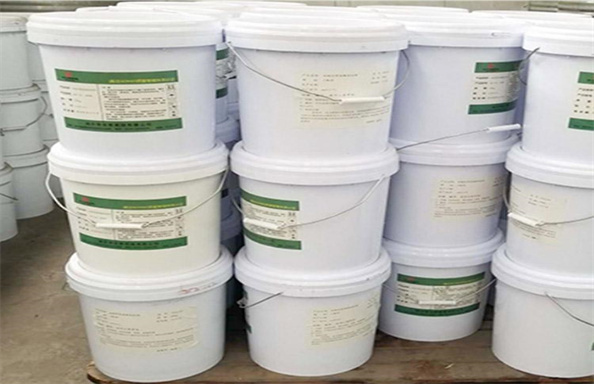
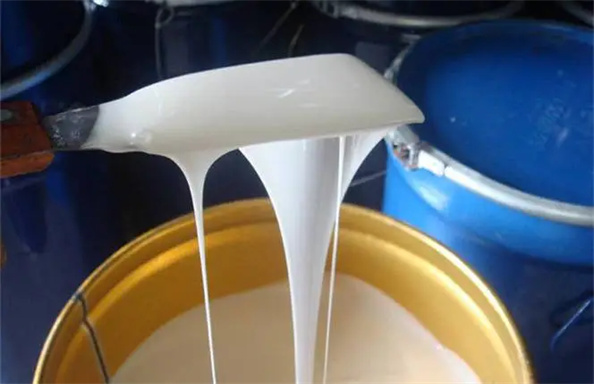
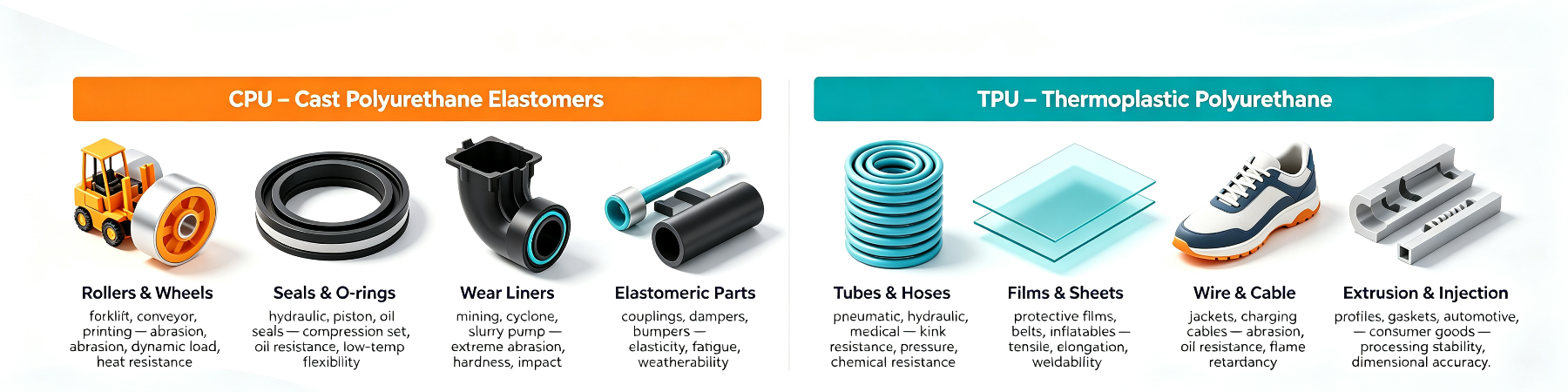
 Polyurethane elastomers (PUE) combine the elasticity of rubber with the strength, abrasion resistance, and load-bearing capacity of engineering plastics. FINEMAX CHEM supplies a complete range for both cast polyurethane elastomers (CPU) and thermoplastic polyurethane (TPU) — including PTMEG, TDI, MOCA, DETDA, DMTDA, BDO, PEA, and TPU resins.
Application
Common Production Challenges
No | Challenge & Impact | Cause | Raw Material Solution |
1 | Inconsistent hardness and physical properties — rejects, quality complaints, out-of-spec. | PTMEG MW variation, prepolymer NCO fluctuation, curative purity inconsistency. | Specify PTMEG with tight MW tolerance (±50); require prepolymer NCO ±0.1%; use high-purity MOCA (≥99.0%) or DETDA (≥97.5%); provide precise stoichiometric ratio guidance; require COA for every lot. |
2 | Short pot life / difficult demolding — low efficiency, high scrap, complex part filling. | Curative reactivity too high, prepolymer temperature too high, catalyst over-dose. | Select DMTDA (E-300) for extended pot life in large castings; use DETDA (E-100) for fast demold in high-volume; control prepolymer temperature (60–80°C); optimize catalyst level; provide pot-life vs. temperature data. |
3 | Poor mold release (sticking) — surface defects, longer cycle, part damage. | Prepolymer NCO too high causing mold adhesion, curative residue buildup, inadequate release agent. | Control NCO index (1.00–1.05); recommend compatible internal mold release agent; specify low-oligomer PTMEG; provide mold temperature guidance (80–120°C); recommend proper mold surface treatment. |
4 | Bubbles / voids in cast parts — mechanical failure, seal leakage, reduced service life. | Moisture in PTMEG/prepolymer, improper degassing, high curative melting temperature. | Require low-moisture PTMEG (<0.03%) and prepolymer (<0.05%); use nitrogen-blanketed packaging; recommend vacuum degassing (5–10 min at 60–80°C); control MOCA melting temperature (<120°C) to avoid decomposition. |
5 | High heat buildup in dynamic applications — roller/wheel failure under continuous load. | Low rebound elastomer, incorrect PTMEG MW, high hysteresis from curative selection. | Use PTMEG (MW 1000–2000) for high rebound (40–65%); select DETDA curative for low hysteresis; optimize hard-segment content (30–40%); recommend post-cure schedule (100°C × 16h) for property development. |
6 | Limited hydrolysis resistance — premature failure in humid/outdoor environments. | Polyester polyol used instead of PTMEG, high acid value in polyol, insufficient stabilization. | Specify PTMEG-based system (not polyester) for hydrolysis resistance; require low-acid-value PTMEG (<0.05 mg KOH/g); recommend hydrolysis stabilizer (carbodiimide); provide humidity-aging test data. |
7 | UV / ozone degradation — cracking, discoloration outdoors. | Aromatic TDI/MDI UV sensitivity, lack of UV stabilizers, unsaturated polyol oxidation. | Use low-unsaturation PTMEG (<0.02 meq/g); recommend HALS/UV absorber additive package; consider aliphatic isocyanate (HDI) for top-layer; provide UV-stabilized TPU grades for outdoor TPU parts. |
8 | TPU processing instability — surface defects, dimensional variation, downtime. | MFI variation between batches, moisture in TPU resin, inconsistent melt temperature. | Specify TPU with tight MFI tolerance (±10%); require pre-drying (80–100°C × 2–4h) to moisture <0.03%; use desiccant dryer; provide processing temperature profile; recommend consistent regrind ratio. |
Recommended Raw Materials
PTMEG — Premium soft segment
Key applications: Rollers & Wheels, Seals & O-rings, Wear Liners, Elastomeric Parts, Specialty Cast (CPU); Footwear, Tubes, Films (polyether TPU synthesis).
Solves: High heat buildup (dynamic), limited hydrolysis resistance, inconsistent hardness.
Polytetramethylene Ether Glycol delivers excellent elasticity, low-temp flexibility, hydrolysis resistance, mechanical strength, and dynamic properties. MW 650–2000 available. The gold standard for high-performance CPU and polyether TPU. Low unsaturation (<0.02 meq/g) for UV and hydrolysis stability.
TDI — Isocyanate hard segment
Key applications: CPU prepolymers for Rollers & Wheels, Seals & O-rings, Wear Liners.
Solves: Inconsistent hardness, short pot life (grade selection resolves).
Cost-effective, good reactivity, balanced mechanical properties. Widely used in prepolymer synthesis for rollers, wheels, and seals. T-80/T-100 grades available. Controlled NCO content (±0.1%) for consistent prepolymer quality. Low-acidity grade available.
MOCA — Industry-standard curing agent
Key applications: Rollers & Wheels, Seals & O-rings, Wear Liners (industrial CPU).
Solves: Inconsistent hardness, poor mold release (with proper processing).
3,3'-Dichloro-4,4'-diaminodiphenylmethane. Excellent mechanical properties, wide processing window, good heat resistance. Powder/flake forms. High purity (≥99.0%) ensures consistent cure. The benchmark curative for industrial CPU requiring high tear strength and compression set performance.
DETDA (E-100) — Fast-curing diamine
Key applications: Rollers & Wheels (high-volume), Elastomeric Parts, fast-cure CPU.
Solves: Short pot life/difficult demolding (fast demold resolves), high heat buildup (low hysteresis).
Diethyltoluenediamine. Fast cure (5–15 min demold), high heat resistance, good demold properties. Lower-toxicity MOCA alternative with excellent dynamic performance and low hysteresis. Ideal for high-volume production and dynamic load applications. Purity ≥97.5%.
DMTDA (E-300) — Extended-pot-life diamine
Key applications: Large castings, complex molds, Wear Liners (large parts).
Solves: Short pot life (extended pot life for large castings).
Dimethylthiotoluenediamine. Longer pot life with controlled reactivity compared to DETDA, ideal for large castings and complex molds where extended filling time is required. Good mechanical properties and heat resistance. Improved processing flexibility for thick-section and large-area CPU parts.
BDO — Diol chain extender
Key applications: Specialty Cast (medical/food-grade clear CPU), TPU synthesis (all TPU grades).
Solves: Inconsistent hardness, poor clarity (clear castings).
High hardness, clear castings, competitive cost. Widely used in food-contact and medical CPU (non-MOCA systems); essential comonomer for TPU synthesis controlling hardness and crystallinity. High purity (≥99.5%) ensures consistent chain extension and polymerization.
PEA — Co-curing agent
Key applications: Elastomeric Parts (hybrid polyurea-elastomer systems), fast-cure CPU.
Solves: High heat buildup, limited impact resistance.
Polyether Amine enhances flexibility, impact resistance, enables faster cure, and improves adhesion. Used in polyurea-elastomer hybrid systems for improved low-temperature performance and reduced heat buildup. Available in MW 230–2000, di- and tri-functional.
TPU Resin — Base resin
Key applications: Footwear, Tubes & Hoses, Films & Sheets, Wire & Cable, Extrusion & Injection.
Solves: TPU processing instability (consistent MFI resolves), inconsistent hardness.
Injection/extrusion/blow molding grades. Polyether and polyester types. Hardness 60A–70D. Special grades: high-transparency, flame-retardant, medical. Tight MFI tolerance (±10%) for processing stability. Narrow MWD for dimensional accuracy.

Get a Quote
Tell us your type (CPU/TPU), target hardness, application, processing method, curing agent preference, and monthly volume — we'll recommend the right raw material combination and quote.

Building 8, Capital Airport International Center, No. 6 Changcheng South Road, Qingdao,Shandong Province, China



 Mobile
 wechat
 whatsapp






 Get in touch

 Language

 Back
Back

 Application of polyurethane materials